01Three people
More than twenty years ago, Johnny McIntyre and Matt Morrissey met in Marlborough, Massachusetts. Johnny grew up there and was running music and entertainment at a small local bar. Matt, originally from Olympia, Washington, had landed in Massachusetts after college in Boston and was managing another establishment on the other side of town.
Through mutual friends, late nights, and the strange gravitational pull that seems to bring hospitality people together after everyone else has sensibly gone to bed, they became friends.
Eventually life sent them in opposite directions. Matt headed back toward the Pacific Northwest. Johnny went north.
In 2013, Johnny landed in Denali Park, Alaska, initially working for Princess Cruises before making his way to a local company operating the Denali Park Salmon Bake and 49th State Brewing Company. That’s where he met Brendan Hulegaard, a young, charismatic back-of-house employee who quickly became part of the extended family that forms when you spend a season working in a tiny Alaska town.
People who have lived seasonal life understand it. You work together, eat together, drink together, celebrate together, occasionally drive each other completely insane, and somehow become family in a matter of months. The friendships tend to survive long after everybody scatters.
And scatter they did.
There were moves. Jobs. Marriages. Kids. Businesses. Travels. Good years and hard ones. Eventually, through entirely separate routes, all three found themselves living in the Portland area.
Johnny reconnected with Matt and Brendan in 2025.
02The room
One night in early summer, Matt and Brendan walked into the former Eagle Eye Tavern in Lents to meet up with Johnny.
It didn’t take much convincing.
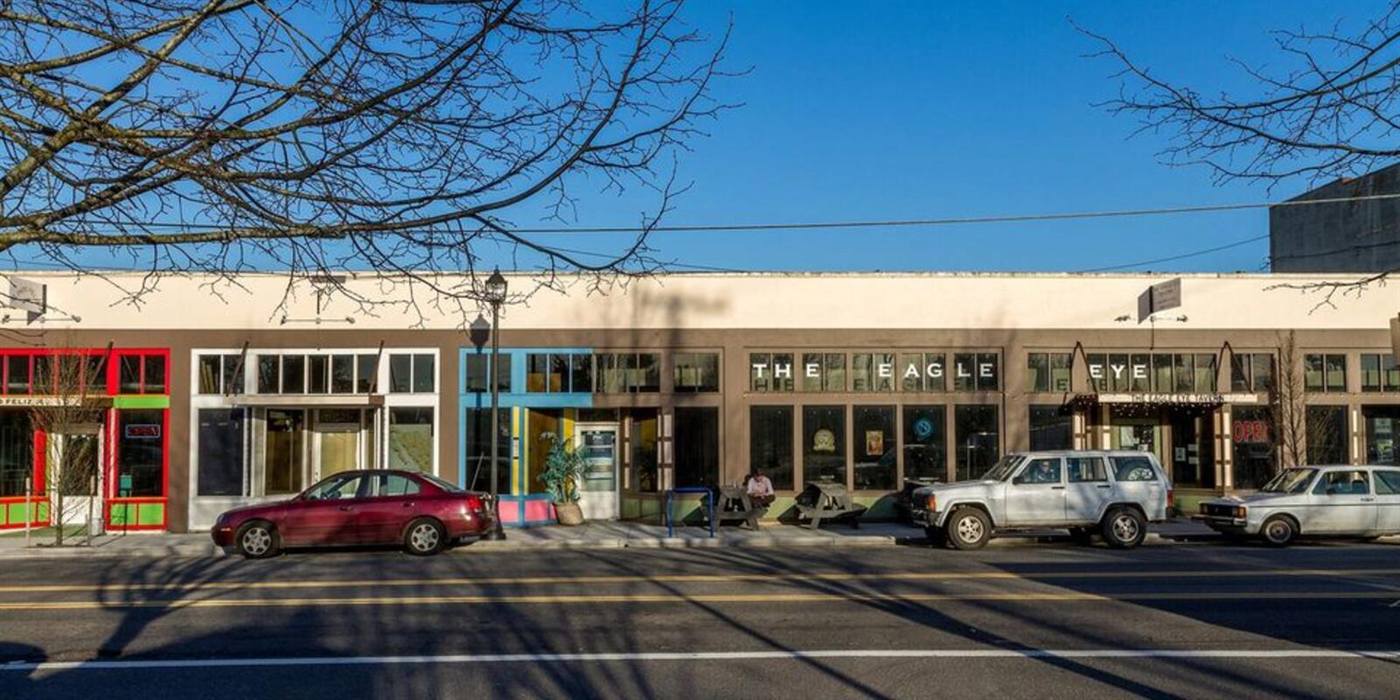
The room had everything they loved: the charm, the size, the neighborhood, and most importantly, the unmistakable feeling of a real dive bar. The Eagle Eye had been a lot of wonderful things to a lot of people, with a genuine community built around it. None of the three wanted to erase that. They simply saw what else the room could become.
For Johnny, Lents made even more sense. When he moved to Portland in 2018, Lents was the first—and only—Portland neighborhood he called home. He fell for it immediately. There’s history here. There’s a blue-collar streak and a weird streak living comfortably alongside each other. In a city that has changed enormously, Lents still has corners that feel unmistakably like the Portland people fell in love with in the first place.
So this is where The Common Loon landed.
03The name
As for the name, the meaning actually came after it.
Brendan first suggested The Common Loon because of his grandmother. When he was a kid, she had a book called To Kill a Common Loon, written by a local author who worked at the Audubon Society. The title stuck with him for years, one of those seemingly insignificant pieces of family history that somehow follows you into adulthood.
When Brendan threw the name out, it just worked. It was personal. It was strange. And nobody was going to forget it.
Then we learned a little more about the bird.
The bird
The common loon is an odd contradiction. It’s beautiful without being delicate, with nearly formal black-and-white plumage and unmistakable red eyes. It can float silently across the water and then let out one of the strangest, most haunting calls in nature. It feels familiar and completely wild at the same time.
And despite the name, there really isn’t much about a loon that feels ordinary.
That sounded about right.
Common, because this place isn’t supposed to be exclusive. It doesn’t belong to one kind of person, one generation, one scene, or one genre of music. At its heart, The Common Loon is a neighborhood public house—a room people share.
And common certainly doesn’t have to mean ordinary.
Loon, because we’re okay with things being a little strange, a little loud, difficult to categorize, and not entirely interested in behaving themselves.
That’s the balance we’re after.
04What we’re building
We want punk bands and country bands, metal and shoegaze, soul and folk, comedians, drag performers, songwriters, weirdos with something they made in their basement, and artists who don’t quite know what box they’re supposed to check. We want longtime Lents neighbors sitting next to people discovering the neighborhood for the first time. We want someone to stop in for a beer and a sandwich and accidentally discover their new favorite local band.
More than anything, we want The Common Loon to remain accessible.
A dive bar shouldn’t require an explanation before you walk through the door. You should be able to come in after work, grab a cheap beer, eat something surprisingly good without anybody describing it as “elevated,” hear some music, meet somebody you wouldn’t have otherwise met, and feel comfortable coming back.
We want to give a stage to people who need one. We want to serve great food without being precious about it. We want drinks at prices that let you stay for another round. And we want to build community for people looking for one.
Because underneath the stickers, neon, questionable decisions and years of stories accumulated on a bar top, that’s ultimately what a great dive bar has always been: a little piece of shared public space.
A place to belong without having to prove that you belong there.
That’s what we’re building in Lents.